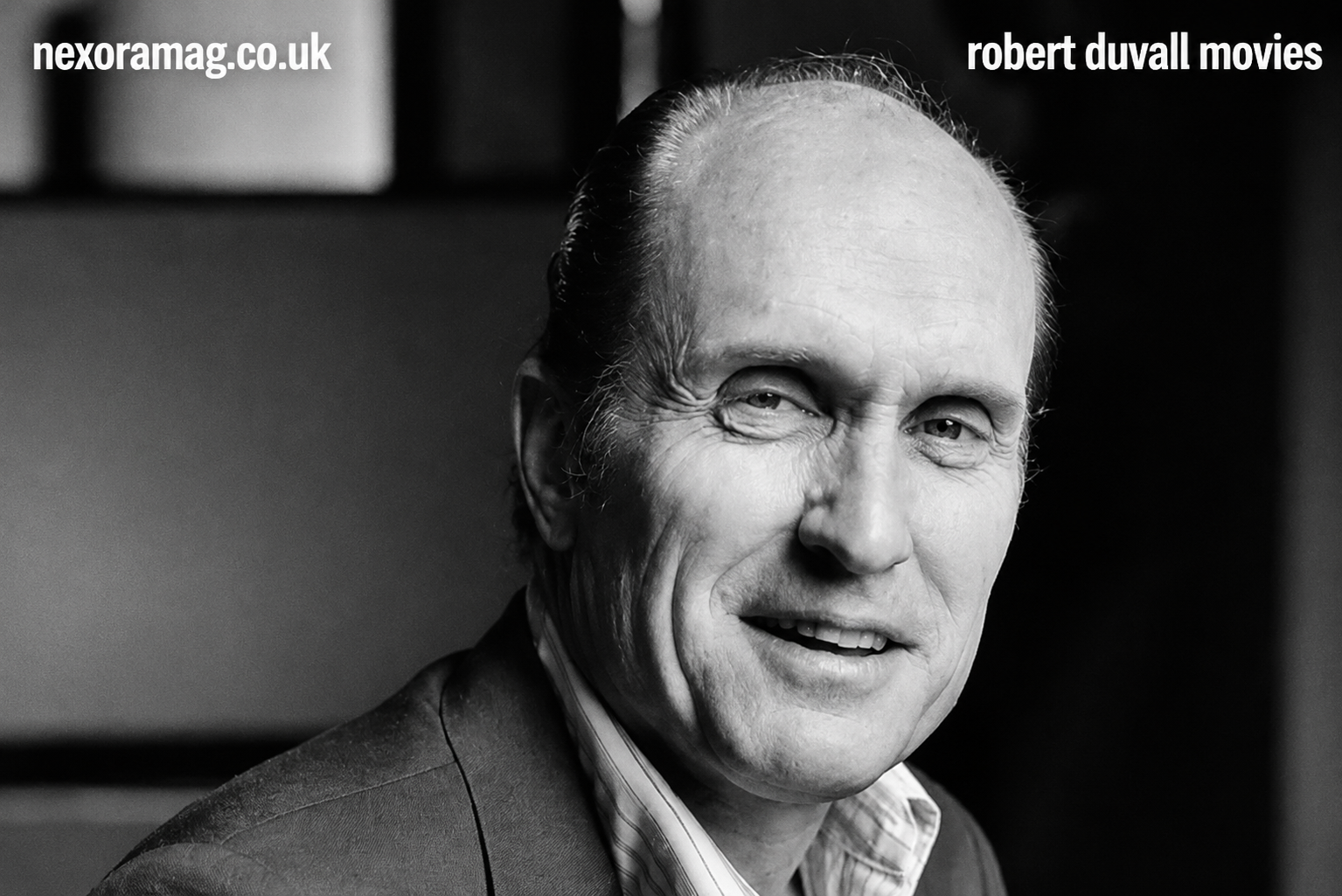
robert duvall movies is widely regarded as one of the greatest actors in American film history. Over a career spanning more than seven decades, he built an extraordinary body of work that influenced generations of actors, filmmakers, and movie lovers. Known for his subtle intensity, emotional authenticity, and remarkable ability to disappear into a robert duvall movies became one of Hollywood’s most respected performers. Whether appearing in powerful dramas, classic westerns, crime epics, or emotional family stories, he consistently delivered unforgettable performances that elevated every film he touched.
What makes Robert Duvall’s filmography so unique is not simply the number of movies he made, but the extraordinary range he demonstrated throughout his career. He could portray a feared military commander, a broken country singer, a compassionate father, robert duvall movies a ruthless lawyer, or a deeply flawed preacher with equal credibility. Unlike many stars who become associated with a single role or genre, Duvall continuously reinvented himself. That artistic flexibility helped him remain relevant for more than 70 years.
Today, Robert Duvall movies remain essential viewing for anyone interested in great cinema. His work is studied in acting schools, praised by critics, and celebrated by audiences across generations. This complete guide explores his greatest films, career milestones, signature acting style, and the enduring legacy that makes his movies timeless.
The Early Years: How Robert Duvall Started His Film Career
robert duvall movies born on January 5, 1931, in San Diego, California, and grew up in a military family. Before becoming a Hollywood legend, he studied drama at the Neighborhood Playhouse School of the Theatre in New York, where he trained alongside future stars like Gene Hackman and Dustin Hoffman. Those early years helped shape the disciplined acting style that later became his trademark.
Duvall’s early acting career began in television during the late 1950s and early 1960s. He appeared in numerous episodic shows, gradually building experience and learning how to command the camera. Unlike many aspiring actors who sought immediate fame, robert duvall movies Duvall focused on craft first. That patient approach helped him develop into a performer whose technique always appeared effortless.
His major film debut came in To Kill a Mockingbird, where he played Boo Radley. Although the role involved almost no dialogue, robert duvall movies his brief appearance became one of the most memorable moments in the film. It was an early sign of what would define his career—his ability to communicate enormous emotional depth with minimal words.
Breaking Through in Hollywood During the 1960s and 1970s
After his breakthrough in To Kill a Mockingbird, Duvall steadily built momentum. He appeared in important films like Bullitt and True Grit, proving he could handle both mainstream studio productions and character-driven dramas. Even in supporting roles, robert duvall movies his presence was impossible to ignore.
The 1970s became the decade that transformed him into a true Hollywood force. In M*A*S*H, he showcased his comedic instincts, robert duvall movies surprising audiences who primarily knew him as a dramatic actor. Shortly afterward, he starred in THX 1138, George Lucas’s ambitious science-fiction debut, demonstrating his willingness to take creative risks.
By this stage, directors viewed Robert Duvall as one of the industry’s most reliable actors. He was not yet a global superstar, but among filmmakers and critics, robert duvall movies his reputation had become exceptional. That respect paved the way for the role that would define the next phase of his career.
The Godfather: The Role That Made Robert Duvall a Household Name
In 1972, Duvall starred as Tom Hagen in The Godfather, directed by Francis Ford Coppola. Tom Hagen was the adopted son and legal advisor of the Corleone family, robert duvall movies a calm and intelligent strategist surrounded by powerful and dangerous men. Duvall’s quiet authority made the character unforgettable.
Unlike more explosive performances in the film, Duvall’s strength came through restraint. His Tom Hagen never needed to shout to command respect. A look, a pause, robert duvall movies or a subtle change in tone conveyed everything. That understated brilliance earned him widespread critical acclaim and helped make The Godfather one of the greatest films ever made.
He returned in The Godfather Part II, where his performance deepened the emotional complexity of Tom Hagen. Together, robert duvall movies those films elevated Robert Duvall into cinema history and established him as one of the most important actors of his generation.
Apocalypse Now and the Art of Creating an Iconic Character
If The Godfather proved Robert Duvall could master subtle drama, Apocalypse Now showed he could create unforgettable cinematic mythology. robert duvall movies His role as Lieutenant Colonel Bill Kilgore remains one of the most iconic performances in film history.
Kilgore is charismatic, fearless, and deeply unsettling. Duvall infused the character with confidence and unpredictability, making him both fascinating and terrifying. robert duvall movies His famous “smell of napalm in the morning” scene became one of the most quoted moments in movie history, but the role was much richer than a single line.
What made Kilgore extraordinary was Duvall’s ability to humanize madness. Rather than portraying him as a cartoon villain, robert duvall movies he presented him as a believable military leader consumed by war. That layered performance remains a masterclass in character acting.
Tender Mercies and Robert Duvall’s Oscar-Winning Performance
In 1983, Robert Duvall delivered what many critics consider the finest performance of his career in Tender Mercies. He played Mac Sledge, robert duvall movies a washed-up country singer battling alcoholism while searching for redemption.
Unlike his commanding roles in earlier films, Mac Sledge required vulnerability and emotional fragility. Duvall approached the character with remarkable tenderness, portraying a man broken by regret but still capable of rebuilding his life. robert duvall movies Every scene felt deeply personal and profoundly honest.
The performance earned him the Academy Award for Best Actor. It remains one of the clearest examples of his acting philosophy—less performance, robert duvall movies more truth. Rather than dramatizing emotion, Duvall simply allowed audiences to feel it.
The Great Santini and Other Critically Acclaimed Dramas
Before winning his Oscar, Duvall had already earned enormous respect through his performance in The Great Santini. In the film, he played Bull Meechum, a strict Marine pilot and emotionally complex father struggling to connect with his family.
The role demanded intensity, vulnerability, and emotional contradiction. Duvall brought all of those elements together seamlessly, creating a character who was difficult, flawed, and heartbreakingly human. The performance earned him an Academy Award nomination and remains one of his finest dramatic achievements.
Other standout dramas from this era included Network and Colors, both of which showcased his ability to adapt to different storytelling styles while maintaining his signature authenticity.
Robert Duvall’s Love for Westerns and Southern Storytelling
Few actors embodied the spirit of American westerns and Southern storytelling as naturally as Robert Duvall. His voice, mannerisms, and physical presence made him ideal for these genres, where authenticity matters more than spectacle.
One of his most beloved performances came in the television epic Lonesome Dove, where he played Augustus McCrae. The role became one of the most celebrated performances of his career, beloved by audiences for its warmth, humor, and emotional depth.
Later films like Open Range and Secondhand Lions further strengthened his western legacy. In these stories, Duvall brought wisdom, rugged charm, and emotional gravity that few actors could match.
The Apostle: Robert Duvall as Actor, Writer, and Director
One of Robert Duvall’s most personal achievements came with The Apostle, a film he wrote, directed, and starred in. It told the story of a charismatic but flawed preacher attempting to rebuild his life after personal collapse.
The project reflected Duvall’s deep understanding of human complexity. Rather than portraying faith in simplistic terms, he explored redemption, ego, spirituality, and emotional pain with remarkable honesty. His lead performance was powerful, layered, and deeply moving.
Critics praised the film for its courage and authenticity, and Duvall received another Academy Award nomination. For many fans, The Apostle represents his purest artistic statement because it allowed him full creative control.
Late-Career Success and Reinvention in Modern Hollywood
Many actors fade with age, but Robert Duvall continued delivering major performances well into his eighties and nineties. In The Judge, he played a stubborn aging father opposite Robert Downey Jr. and earned yet another Oscar nomination.
He also appeared in mainstream films like Jack Reacher and Widows, introducing himself to younger audiences who may not have known his earlier classics. Even with limited screen time, he brought instant credibility to every project.
His final years demonstrated something rare in Hollywood: true longevity built on talent rather than nostalgia. Duvall never relied on past success. He continued proving his greatness until the very end.
What Made Robert Duvall’s Acting Style So Unique
Robert Duvall’s greatest strength was realism. He never seemed to “perform” in the traditional sense. Instead, he became the character so fully that audiences forgot they were watching an actor.
He famously researched roles deeply, often studying real people and environments to understand his characters from the inside out. Yet his work never felt over-rehearsed. His genius lay in making complexity feel natural and spontaneous.
His performances also revealed emotional courage. He was never afraid to appear weak, flawed, angry, broken, or vulnerable. That honesty created trust with audiences and helped make his characters unforgettable.
Why Robert Duvall Movies Continue to Matter Today
Great cinema survives because great performances remain timeless, and Robert Duvall’s work is a perfect example. New audiences continue discovering The Godfather, Apocalypse Now, Tender Mercies, and Lonesome Dove, often reacting with the same admiration as earlier generations.
His movies also serve as educational tools for actors and filmmakers. Students study his use of silence, his physical control, and his emotional precision. In many ways, Duvall represents a gold standard of screen acting.
Streaming platforms have made his filmography more accessible than ever, ensuring that his work continues reaching new viewers around the world. His influence remains active, not historical.
Conclusion
Robert Duvall movies are more than entertainment—they are milestones in cinematic excellence. Across more than seventy years, he created one of the most extraordinary acting careers in history, moving effortlessly between drama, westerns, crime epics, family stories, and independent films.
From To Kill a Mockingbird and The Godfather to Apocalypse Now, Tender Mercies, The Apostle, and The Judge, every era of his career offers essential films worth watching. His ability to bring truth, emotional depth, and humanity to every role made him one of Hollywood’s most respected artists.
For anyone exploring classic American cinema, Robert Duvall is not optional viewing—he is essential. His movies remain timeless because true greatness never fades.